|
|
 |
| |
We have been testing all our breeding cats for the gene responsible for the Chocolate and Lilac colouration in the Ragdoll breed for well over a decade now. Prior to us testing, it has been believed that this gene has been 'lost' within the Ragdoll gene pool in the UK.
In 2002, a breeding program was initiated to allow breeders to reintroduce the gene by outcrossing to Persians and Siamese. Many breeders had been opposed to outcrossing to any breed, with the vast majority of breeders voting against it. Eventually, the breed were put in the position where we had to allow an outcrossing programme to take place, and reluctantly agreed, but only on the promise from the registering body (the Governing Council for the Cat Fancy) that we would never at any stage in the future, be asked to allow another outcrossing programme, nor have any outcrosses ever accepted within our breed.
A few years ago, some breeders in the UK started to import Ragdolls into the UK which showed an outcross to the Balinese within their pedigrees. The Balinese (and other) outcrosses are highly controversial at the UK, with many breeders believing these cats should not have been registered as Ragdolls with the Governing Council for the Cat Fancy (GCCF), as the outcross was never allowable under the GCCF Ragdoll Registration Policy. Because the outcross was more than 5 generations previous, they were accepted by the GCCF. As you can imagine, due to the promises made to the Ragdoll community in 2002, there was a huge uproar that these cats had been allowed to enter our gene pool.
Here at Eiserblew Ragdolls we have a strict no outcrossing policy, so have never taken part in any outcrossing programs, nor have we used cats in our breeding which show any outcrosses in their pedigrees. Because the gene responsible for Chocolate and Lilac colouring was believed to be lost in the UK gene pool, we didn't expect to find any carriers.
On the 16th April 2010, much to our surprise, the DNA test we sent to Australia for one of our 100% Old English (Descended entirely from the first 12 Ragdolls imported into the UK) stud boys confirmed that he was in fact a carrier of the Chocolate gene. One of his daughters has also inherited this gene from him. We are currently working on diversifying our chocolate carrying lines, so we can move our lines forward in these two rare colours. For us, this is a marathon, not a race.
Since we found our first carriers, many other breeders have come forward with proof that their Ragdolls also carry the Chocolate gene. We have found Ragdolls in the UK from many different lines who carry Chocolate. The same overseas. We are also aware of a 100% Old English Ragdoll outside of the UK who also carries Chocolate, and many others in the UK. For all these years, UK breeders have been denying the existance of the Chocolate gene. How wrong we all were.
|
| |
|
| |
Ragadmiral
DNA Proven Chocolate carrier
the boy who rewrote history!
|
| |
|
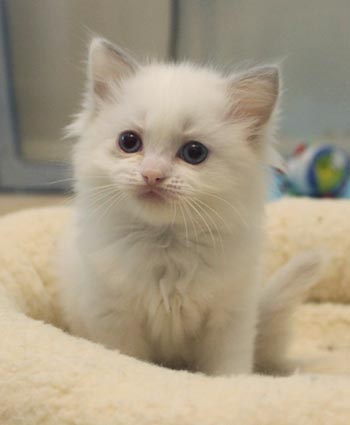
2011 saw the realisation of a dream. Our first Lilac was born.
We believe she is the first DNA proven Lilac Ragdoll from
100% Old English lines in the entire world. May we proudly introduce...
Eiserblew Procol Harum
DNA Proven Lilac
and a much loved pet!
|
|